Updated on Sep 23, 2026
Keywords
12ºEIM, Cooperation, Ibero-America, Heritage
Countries
Andorra

Argentina

Bolivia

Brazil

Chile

Colombia

Costa Rica

Cuba

Ecuador

El Salvador

Spain

Guatemala

Honduras

Mexico

Nicaragua

Panama

Paraguay

Peru

Portugal

Dominican Republic

Uruguay

Venezuela

Action
Meetings
The 12th Ibero-American Museum Meeting continues to make waves

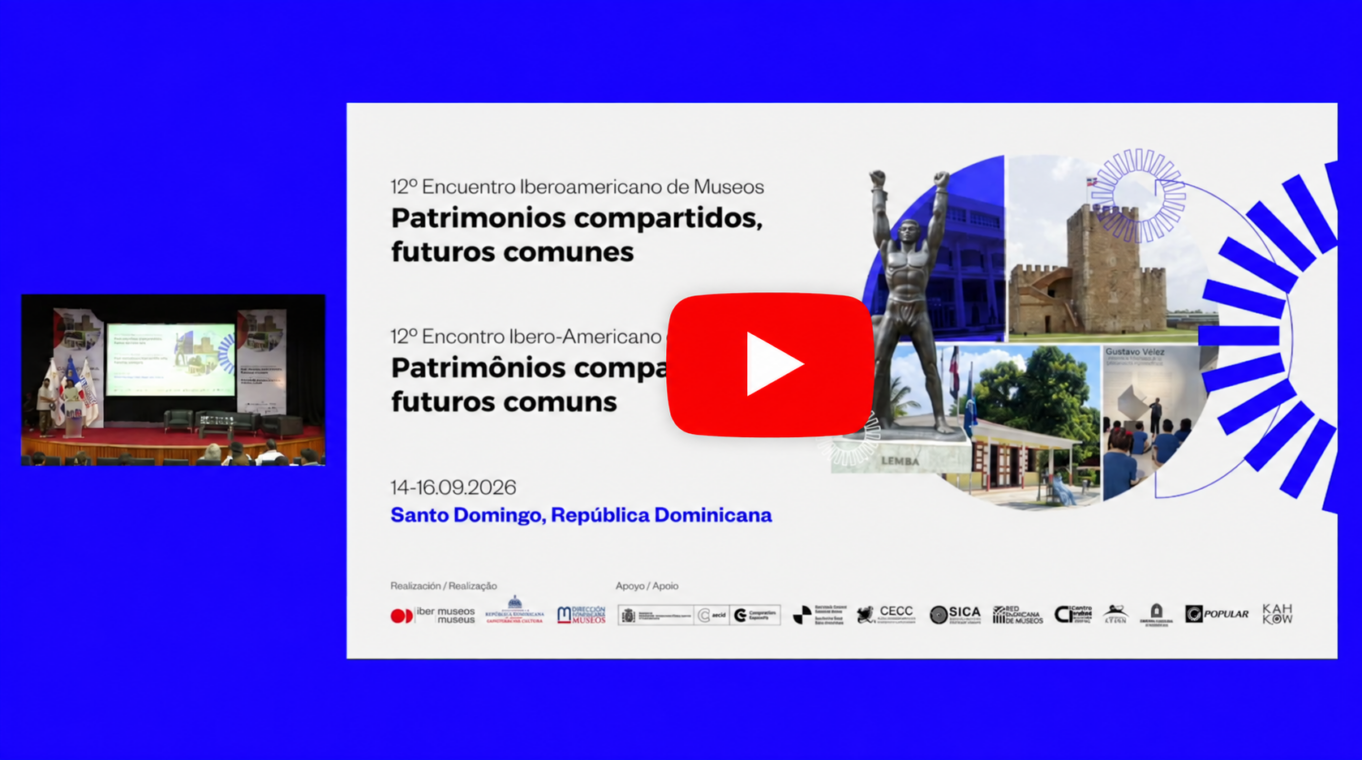
From September 14 to 16, Santo Domingo became the meeting point for the Ibero-American museum community. Over three days, we celebrated the 12th Ibero-American Museum Meeting: Shared Heritage, Common Futures (12th EIM), an opportunity to come together again, share experiences, and collectively reflect on the challenges facing our museums and the futures we want to build together.
The 12th EIM was the result of a broad partnership between the Ibermuseums Program, the General Directorate of Museums of the Ministry of Culture of the Dominican Republic, the National Network of Museums of the Dominican Republic, the Spanish Agency for International Development Cooperation, the Ibero-American General Secretariat, the Central American Educational and Cultural Coordination, and other strategic partners.
The conferences, dialogues, roundtables, and workshops brought together more than 80 museum professionals, specialists, researchers, and representatives of the highest-level museum authorities from 17 Ibero-American countries, as well as Belize as an observer country.
The Santo Domingo Declaration: a shared roadmap
As a result of the 12th EIM, the 17 Ibero-American countries, Belize, the Ibero-American General Secretariat, and the Central American Educational and Cultural Coordination signed the Santo Domingo Declaration, a new roadmap to guide the strengthening of public policies and the development of museums across Ibero-America.
Through nineteen recommendations, the Declaration brings together the reflections shared throughout the preparation and celebration of the Meeting and translates them into concrete guidelines for action. Its main areas of focus include:
- strengthening the public institutional framework for museums and their role within their territories;
- recognizing and supporting community-based museum initiatives;
- promoting research, training, and museum sustainability;
- expanding Ibero-American cooperation and networking.
At the same time, the Declaration calls for progress towards more democratic and participatory models of governance, broader processes of social co-creation, and the recognition of cultural rights, universal accessibility, and environmental justice as guiding principles for museum practice.
In doing so, the participating countries commit to bringing these guidelines into their respective contexts and public policies, recognizing that shared challenges also require collectively developed responses.
A history built through real encounters
The history of the Ibero-American Museum Meetings has been marked by significant transformations, reflections, and shared positions developed collectively by Ibero-American countries, with the aim of contributing to the comprehensive development and strengthening of the museum sector. Throughout their twelve editions, the Meetings have enabled us to share perspectives and experiences, recognize ourselves in both our differences and similarities, strengthen ties, and open up new possibilities for collaboration.
This human dimension was especially present in Santo Domingo. We experienced it in the conferences and dialogue sessions, in the workshops and spaces for exchange, but also in informal conversations, in the cultural manifestations that accompanied the Meeting, and in the many moments shared in the Colonial City, the setting and home of this twelfth edition.
More than 200 people took part in person in Santo Domingo, while over 1,600 followed the broadcasts through our digital channels. But the Meeting does not end there. The conversations, connections, and reflections that emerged during those days continue to unfold, finding new ways to shape the work of museums and cooperation among our countries.
The Dominican Republic taught us that when you thank someone for anything, people respond: “siempre” — “always.” We carry that “always” with us as an invitation to keep meeting, talking, sharing, and building together.
See you at the 13th Ibero-American Museum Meeting!